



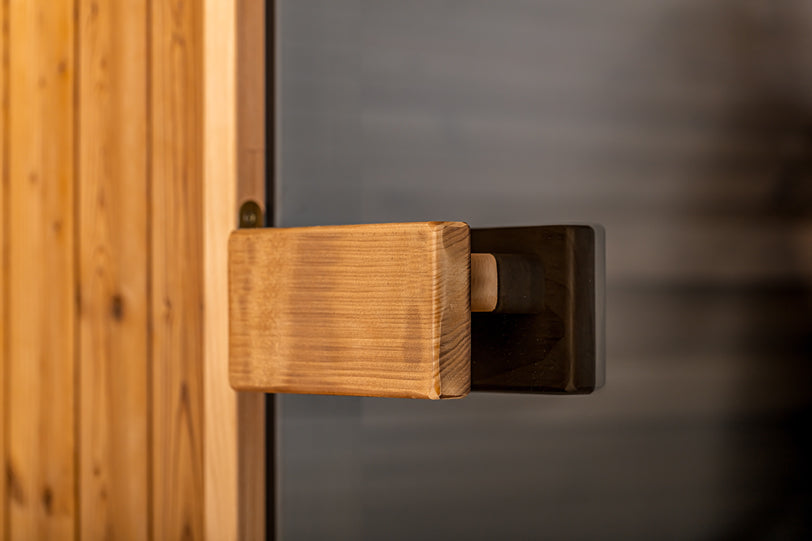
Collection: ADA-Compliant Sauna Doors for 36 x 80 Openings
Quick Answers
PRIMARY PURPOSE:
Compare ADA-compliant sauna doors by style, wood type, and glass layout.
COMMON SIZE IN THIS COLLECTION:
36" x 80" sauna doors. Check the exact size on the product page.
BEFORE YOU ORDER:
Check rough opening, jamb depth or wall thickness, left or right swing, and hardware needs.
RELATED HUBS:
Sauna Doors · All-Glass Sauna Doors · Half-Glass Sauna Doors · All-Wood Sauna Doors
WOOD SPECIES OPTIONS
Many ADA-ready builds choose cedar for a classic sauna look or aspen for a lighter interior. Check the wood species and finish on each product listing.
WHY A QUALITY DOOR MATTERS
A good sauna door helps the room work well over time. Superior Sauna doors are made for heat and moisture.
Look for a strong laminated jamb to help resist warping, a rubber gasket for a tight seal, and an adjustable magnetic latch for a steady close.
The right door helps hold heat, improve comfort, and shape the room's feel.
STOCK & RESTOCK NOTES:
Doors sell out fast. If the door you need is out of stock, click Notify Me When Available on the product page. You'll get an alert when the next shipment arrives.
BUILDING A DIY SAUNA? Liner Kits Include a Door
If you're building a DIY sauna, see our liner kits. They include a door for your project:
Door Swing Example

HELPFUL ADD-ONS AND RELATED COLLECTIONS
FAQs
Are these doors ADA-compliant by default?
This collection groups doors made for ADA-focused projects. Final ADA-compliance depends on the full install, including clearances, thresholds, hardware height, and site conditions. Check project needs with your installer and local code guidance.
Do ADA sauna doors hold heat well?
Yes. These doors use sauna-ready sealing parts. Review the gasket and latch details on the product page.
Can I use these doors in a commercial sauna?
Many customers use them in commercial installs. Check your project's durability needs, traffic levels, and local code rules.


